An honest, on-the-ground description of what it is actually like to raft Albania's most dramatic canyon — written by guides who know this canyon inside out.
Explore Vjosa rafting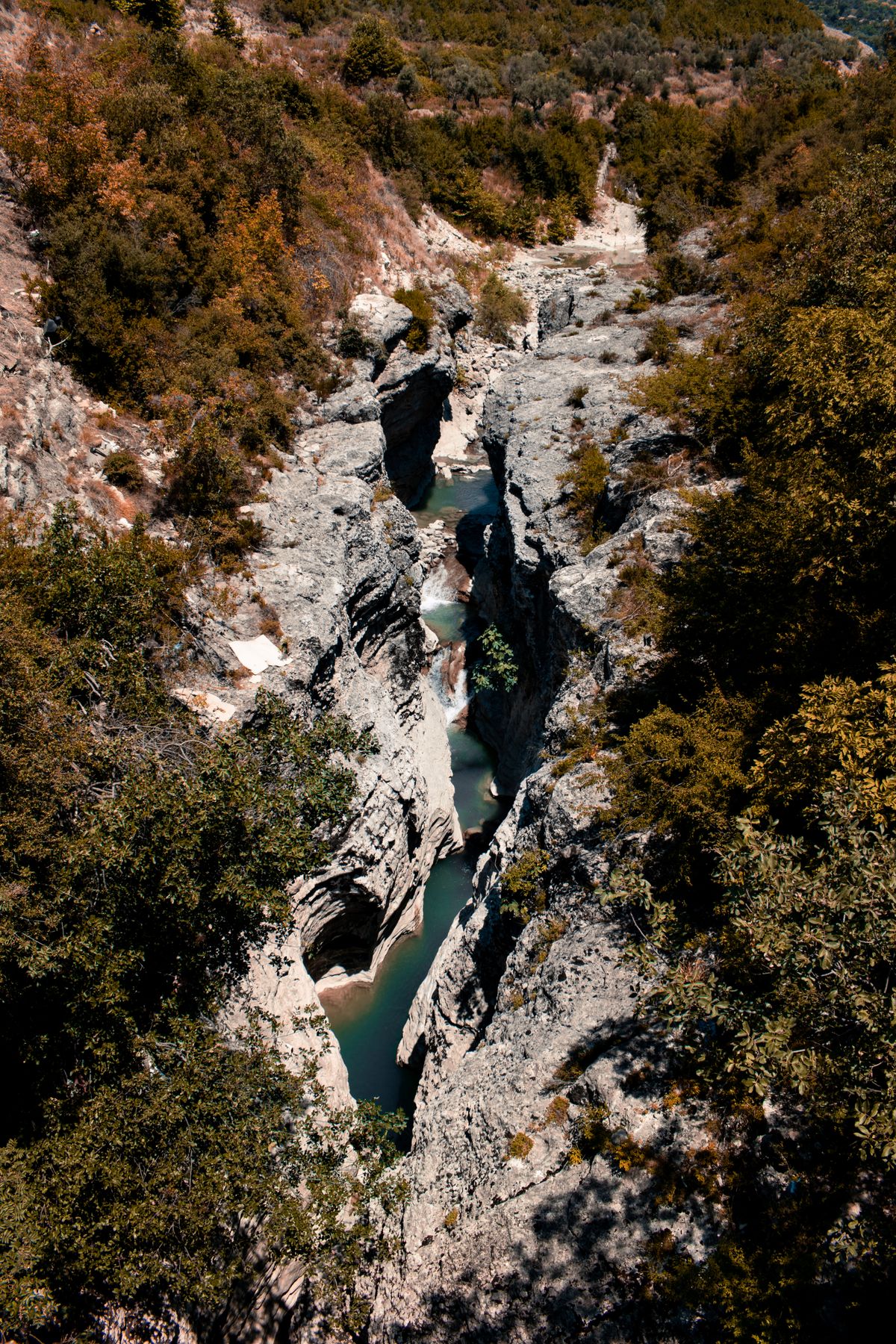
Most visitors do not understand what the Osumi is until they are floating in it. From the road, the canyon is almost invisible — it cuts through the landscape so deep that you can drive within a kilometer of it and not realize it exists. Then you put in at Çorovodë, paddle for about ten minutes, and the walls close in. Suddenly there are 60 meters of limestone above you on both sides, blocking out most of the sky. The temperature drops because you are in shadow. The sound changes because every echo bounces off rock. You realize you are not on a river anymore — you are inside a cathedral.
This is the moment that makes the Osumi worth the trip. The Vjosa is wilder. The Osumi is more dramatic. They are different experiences, and most people who do both end up saying the Osumi was the one that surprised them most.
The run launches at Çorovodë and covers approximately 13 kilometers through the heart of the canyon. The first section is gentle Class I-II water, which gives you time to settle in and learn the paddle commands. About 45 minutes in, the gorge narrows and the rapids step up to Class II-III. There are around a dozen named rapids in this stretch — some quick and punchy, others longer wave trains that go on for fifty meters or more.
Halfway through, most trips stop at a wide gravel beach where everyone can swim. The water is cold even in summer, which is the point — it is the most refreshing swim you will have all year. Some paddlers climb the small waterfalls that come down the canyon walls. After the swim, the second half of the canyon has the highest walls of the entire run. The takeout is just downstream of the canyon mouth.
The Vjosa is a wild valley river — broad, sun-drenched, with views that open in every direction. The Osumi is a slot canyon experience — narrow, shaded, with the walls dominating every photo. If you only have one day in Albania for rafting, choose based on what you want to see. The Vjosa feels like an explorer's river. The Osumi feels like a geological wonder. Many visitors make time for both, since each river is a completely different experience — our own guided trips run on the Vjosa.
The Osumi is a small river compared to the Vjosa, which means it depends much more on seasonal water. May is the absolute peak month — high water, big rapids, full canyon experience. April and early June are almost as good. By late June water levels start dropping. July and August are still runnable but the rapids become gentler and better suited to gentle floating than to serious whitewater. Read more in our seasonal guide.
The canyon is shaded for most of the route, so even on hot days bring a thin layer to wear during the floating sections. The water is cold — typically 10-14°C even in summer — so a full wetsuit is wise. Bring secure water shoes; you will be walking on slippery limestone at the swim stops. The drive to Çorovodë from Berat takes about 90 minutes, so plan for an early start. Read our full Osumi guide for more practical details.
The standard commercial route covers about 13 kilometres of the canyon and takes between three and four hours of paddling, plus swimming and exploration stops. The full canyon is 26 kilometres long but the upper sections are not commercially rafted.
The canyon walls rise as high as 80 meters above the water in the deepest sections. They are made of limestone that has been carved by the river over more than three million years.
May is the peak month for Osumi whitewater. April and early June are also excellent. By August water levels drop and the experience becomes calmer — better suited to river tubing than serious rafting.
We run our guided trips on the Vjosa — Europe's last wild river. This page is here to help you get to know the Osumi Canyon.
Explore Vjosa raftingRead more: Top Destinations, Osumi Canyon.
